The Kodak 35mm Slide & Film Viewer review is for anyone sorting through old slides or negatives who wants a quick, self-contained way to see what each frame holds.
Its built-in light, 3X magnifier, and dedicated inputs make it a practical viewing tool, though its purpose is inspection rather than digitizing or projecting images.
Kodak Film Viewer Review Summary
The quick verdict
3,000+ ratings
Read Amazon ReviewsKodak 35mm Slide & Film Viewer
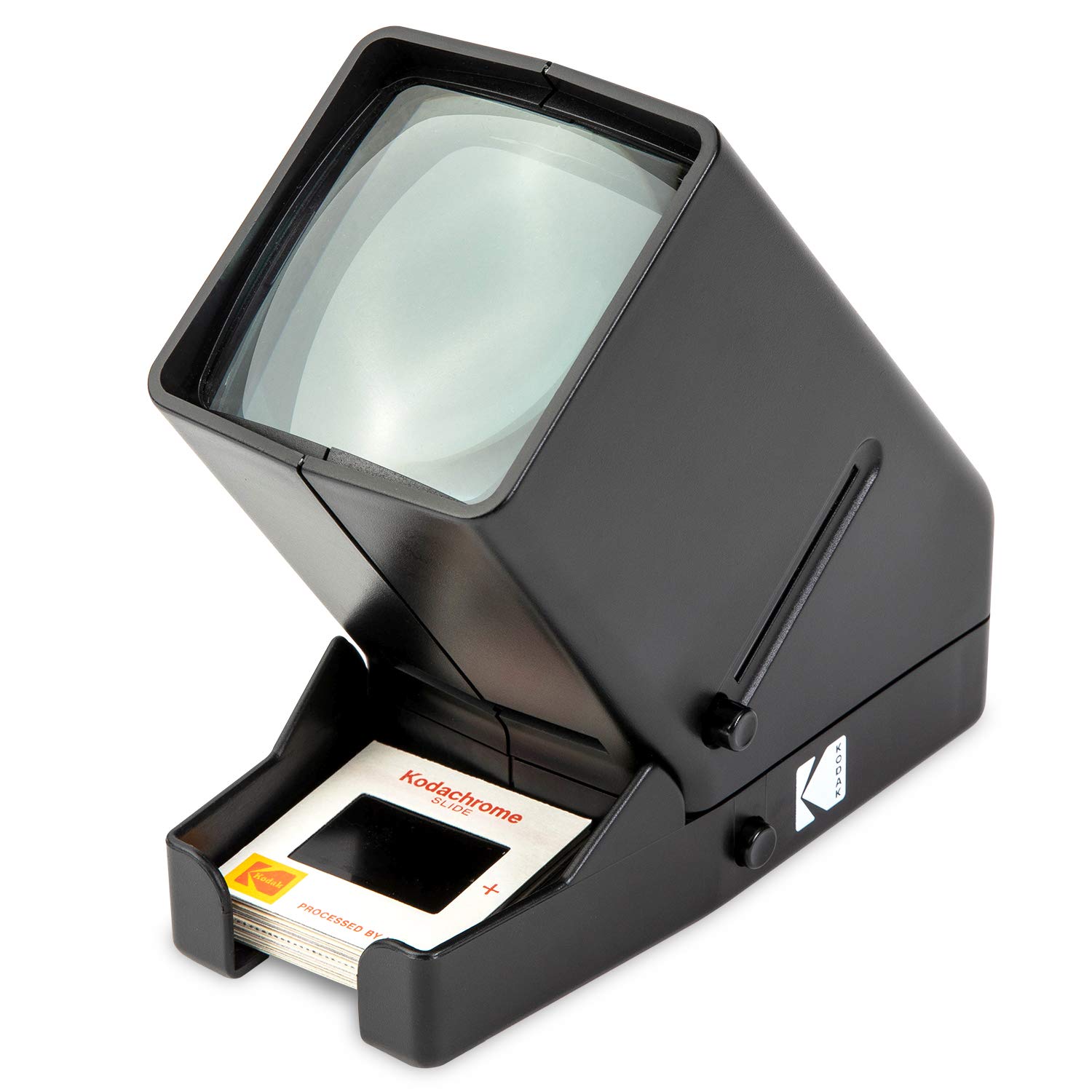
A straightforward handheld viewer for people who want to inspect 35mm slides and film negatives without setting up a projector.
- Designed for 35mm slides and film negatives, with a dedicated slide slot and a separate film input.
- Built-in magnifier provides 3X enlargement for viewing small frames.
- A large viewing area uses daylight LED illumination to backlight the image.
- Quick-eject button helps remove a slide when moving to another frame.

Pros
- Combines illumination and magnification in one handheld viewer.
- Accommodates both 35mm slides and film negatives.
Consider before buying
- The separately sold DC cable is an extra consideration for buyers who prefer wired power.
- The described design is for individual viewing, so it does not serve as a room projector.
Read the full review summary
This handheld viewer combines a backlit viewing area with 3X magnification, so small 35mm frames are easier to examine than when held up to ordinary room light.
A dedicated slide slot and film input, together with a quick-eject button, support a simple insert, view, and move-on routine when working through a group of images.
Battery operation makes the viewer convenient to move between rooms or take along when reviewing family archives, and the product can also be DC powered with a separately sold cable.
It is best suited to casual viewing and sorting; buyers looking to create digital copies or show images to a group should choose a tool designed for those jobs.
The buying factors
Kodak Film Viewer Scorecard
Editorial scores reflect listed features and buyer fit; they are not laboratory measurements or customer ratings.
Ease of viewing
The illuminated viewing area and 3X magnification are designed to make small frames easier to inspect.
Loading workflow
A dedicated slide slot, film input, and quick-eject button support straightforward frame changes.
Portability
Battery operation allows viewing away from a fixed power outlet.
Power flexibility
It supports battery use and DC power, though the DC cable is sold separately.
Group presentation
The handheld viewer is intended for looking at individual images, rather than projecting them for a room.
Digital preservation
The described functions are for viewing; no image-scanning or file-saving workflow is included in the product description.
Key Features and Specifications of Kodak Film Viewer
- Designed for 35mm slides and film negatives, with a dedicated slide slot and a separate film input.
- Built-in magnifier provides 3X enlargement for viewing small frames.
- A large viewing area uses daylight LED illumination to backlight the image.
- Quick-eject button helps remove a slide when moving to another frame.
- Battery operation supports portable use; DC power is also possible with a separately sold cable.
Pros and Cons of Kodak Film Viewer
Pros
- Combines illumination and magnification in one handheld viewer.
- Accommodates both 35mm slides and film negatives.
- A quick-eject button suits repeated viewing and sorting.
- Battery operation makes it easier to use away from a fixed outlet.
Consider before buying
- The separately sold DC cable is an extra consideration for buyers who prefer wired power.
- The described design is for individual viewing, so it does not serve as a room projector.
- Buyers who want digital files should check for a separate scanning solution.
Who Should Buy Kodak Film Viewer?
Good fit
Consider the Kodak viewer if you have boxes of 35mm slides or negatives and want to inspect them without arranging a projection setup.
The built-in backlight and 3X magnifier are useful for previewing frames, checking what is worth keeping, or sharing a closer look with someone beside you.
Its loading arrangement is suited to moving from one image to the next: insert a slide or film frame, view it, then use the quick-eject button when ready to continue.
Battery operation is convenient when you want to move around; if you expect to use it near an outlet for longer sessions, check that the separate DC cable is available and compatible before buying.
This is a focused viewing aid rather than an all-in-one archive workflow. It can help you decide which frames deserve further attention, while scanning and storing digital copies require a separate process.
Who should skip it
Skip this style of viewer if your main goal is to project slides onto a wall or screen for a group. Its described use is close-up viewing of individual frames.
Look for a dedicated film scanner if you need digital image files as the primary result. The listed features cover illumination, magnification, and frame loading, not image capture or file export.
How the Kodak Film Viewer Fits a 35mm Archive
Backlighting and magnification for inspection
Slides and negatives are small, so the combination of an illuminated viewing area and 3X magnification gives this viewer a practical role in examining individual frames.
The backlight is described as daylight LED illumination, while the magnifier is intended to enlarge the image.
That setup may help with reviewing a collection, but the stated design does not establish a scanning resolution or guarantee fine-detail results.
A simple frame-by-frame routine
The dedicated slide slot and film input reduce the steps needed to position compatible material, and the quick-eject button is useful when you are moving through multiple frames.
This makes the viewer more suited to informal sorting than a setup that requires projecting or digitizing each image.
Before a long session, check that the specific slide mounts and film format you plan to use fit the inputs.
Power and where you plan to use it
Battery operation favors portability, whether you are reviewing a collection in another room or bringing the viewer to where the slides are stored.
DC power offers another route, but the cable is sold separately, so factor that into your setup if regular wired use matters.
The product description does not specify battery life or cable details, making those sensible points to confirm before relying on it for extended sessions.
Viewing versus preserving
The Kodak viewer is built around seeing images through a lighted magnifier. That can be a useful first step when deciding which frames to scan or share, but it should not be mistaken for a digital preservation device.
Buyers who need searchable files, backups, or easy digital sharing should plan for a separate scanner or capture workflow.
Alternatives to Kodak Film Viewer
No alternative model is recommended here. Compare the viewing, projection, and digitizing features that matter to your routine before choosing another option.
Is Kodak Film Viewer Worth It?
The Kodak 35mm Slide & Film Viewer is worth considering if your priority is a portable, straightforward way to view 35mm slides and negatives.
Its backlit area, 3X magnification, and quick-eject workflow are well matched to checking individual frames and sorting a collection.
Buy it as a viewer, not as a projector or digitizer.
If you want to preserve images as files or present them to a group, choose equipment designed for those tasks; if close-up inspection is the goal, confirm your film formats and preferred power setup before purchasing.
Your review at a glance
3,000+ ratings
Read Amazon ReviewsKodak 35mm Slide & Film Viewer
A straightforward handheld viewer for people who want to inspect 35mm slides and film negatives without setting up a projector.
- Designed for 35mm slides and film negatives, with a dedicated slide slot and a separate film input.
- Built-in magnifier provides 3X enlargement for viewing small frames.
- A large viewing area uses daylight LED illumination to backlight the image.
- Quick-eject button helps remove a slide when moving to another frame.